Distinguished Experts Advancing Sustainability,
Innovation, Partnerships, and Global Development
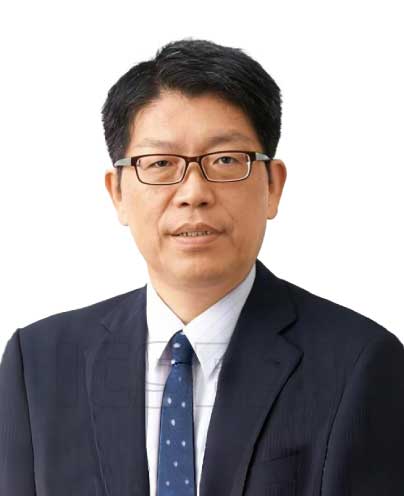
Prof. Tomonobu Senjyu
University of the RyukyusOkinawa, Japan

Prof. Marc A. Rosen
Ontario Tech UniversityOntario, Canada

Prof. Katja A. Rösler
Ruhr West University of Applied SciencesMülheim an der Ruhr, Germany
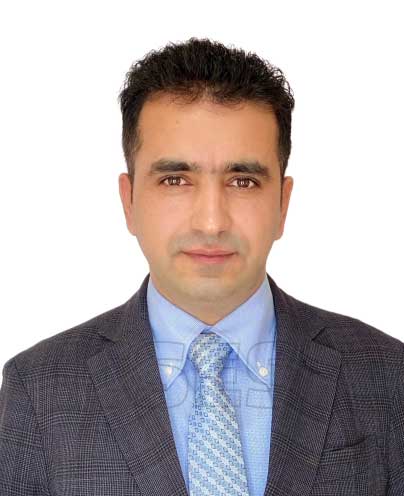
Dr. Mir Sayed Shah Danish
Research and Education Promotion Association (REPA)California, USA
Selected Keynote Highlights from SIP 2026

Prof. Marc A. Rosen
Ph.D., P.Eng., FRSC, FEIC, FCSME, FASME, FIEF, FCAE, FCSSE
Professor, Past President, Engineering Institute of Canada
Ontario Tech UniversityEnergy Sustainability: A Crucial Path to Sustainable Development and Sustainability
Abstract: Sustainable development is a fundamental objective for human and societal progress, with energy sustainability serving as a central pillar for achieving long-term environmental and economic stability. This keynote examines the critical role of energy in modern societies, emphasizing its influence on economic development, quality of life, and environmental impact. The presentation explores key factors required to transition toward sustainable energy systems, including appropriate energy-resource selection, sustainable energy carriers, and improved energy conversion and utilization efficiency. It also highlights the importance of integrating environmental stewardship into energy planning and operations. Broader sustainability dimensions, including economics, equity, land use, lifestyle, sociopolitical factors, and population dynamics, are also discussed. Practical examples and strategic pathways are presented for advancing energy sustainability and sustainable development.

Dr. Mir Sayed Shah Danish
Ph.D., MBA, CEng, SMIEEE, MIET
Research & Innovation Chair (RIC)
Research and Education Promotion Association (REPA) LLCAI-Driven Machine Learning Framework for Optimizing Emissions & Energy Efficiency in Power Plants
Abstract: This keynote presents an artificial intelligence-driven framework for optimizing emissions and improving energy efficiency in combined-cycle power plants (CCPPs). The approach integrates thermodynamic modeling, data analytics, and neural-network-based optimization to reduce nitrogen-oxides (NOx) emissions while maintaining operational performance. The framework uses four years of high-resolution operational data from a 150 MW gas-turbine power plant in north-western Türkiye. It was analyzed using Neural Designer and validated through a Python-based simulation pipeline, moving from deterministic formulations to data-driven predictive modeling. An online surrogate-simulation engine enables rapid prediction of NOx variations without iterative optimization. The optimized gas-turbine-exhaust pressure is PGTE = 17.844 mbar, and the outlet NOx concentration is CNOx = 78.66 mg·m−3. Sensitivity analysis identifies turbine inlet temperature and ambient pressure as dominant variables influencing emission intensity. The framework also shows adaptability to hydrogen-enriched fuels, biomass co-firing, and carbon capture systems.